
New Hope City Directory Collections
New Hope city directories are held in several forms, so the useful starting point depends on the year. The Hennepin County Library digitized set is the strongest annual run for a New Hope address. Minnesota Historical Society telephone volumes extend the window before and after that set. Hennepin County Library Special Collections, Hennepin History Museum, and the county plat collection supply supporting material when a directory result needs place, date, or legal-subdivision context. Keep the edition and page with every result because an annual listing is a dated lead, not proof of a continuous household.
| Collection | Years | Where Held | Access |
|---|---|---|---|
| New Hope–Plymouth–Wayzata city directories | 1964–1983 | Hennepin County Library Digital Collections | Exact-text online search and digitized scans |
| Hennepin telephone directories | New Hope holdings mostly 1960–1992; selected later holdings | Minnesota Historical Society | Open research collection with print, yellow-page, and fiche editions |
| Suburban-area print directories | 1956–1988, varying by city | Hennepin County Library collections | Library research route |
| Hennepin County plat maps | Exact map dates vary | Hennepin County Library and Recorder partnership collection | More than 4,000 maps digitized |
Use the library collection for the yearly name-and-address layer. Use the telephone series when the directory window is too narrow, and use plats only to connect a house to a subdivision or legal description. Publication gaps, a changed locality label, and head-of-household conventions can all explain a missing hit.
Note: Record the edition year and page before treating a New Hope directory appearance as evidence of an address connection.
New Hope City Directory Shelf
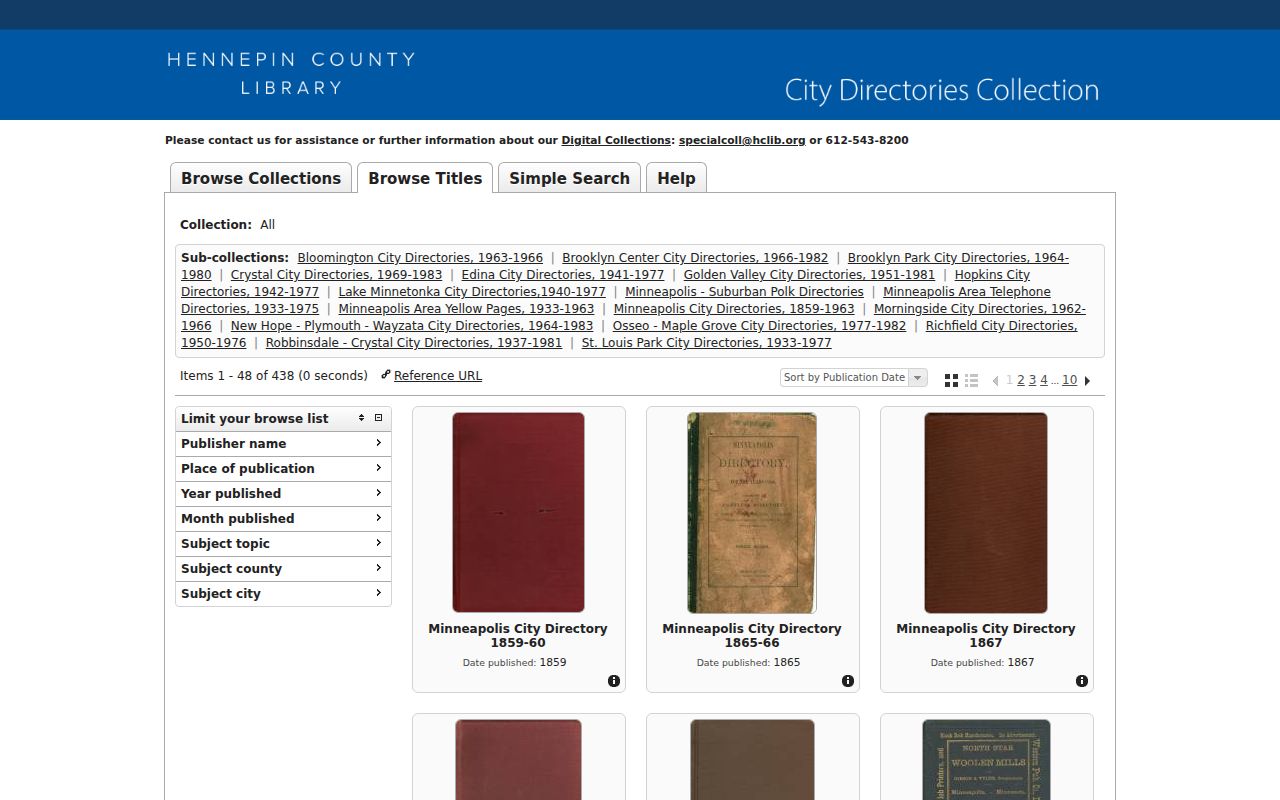
The digitized New Hope city directory run is cataloged as “New Hope–Plymouth–Wayzata,” not as a city-only shelf. That grouping is a practical search clue. A name or address can be missed when a nearby-city filter remains selected, and an address query must follow the volume's own abbreviation style. Try the street number with the surname separately, then test forms such as N and North or Ave and Avenue. Yellow arrows in the collection indicate additional results.
Hennepin County Library's city browse collection shows the place where New Hope historical directories are organized with nearby communities.
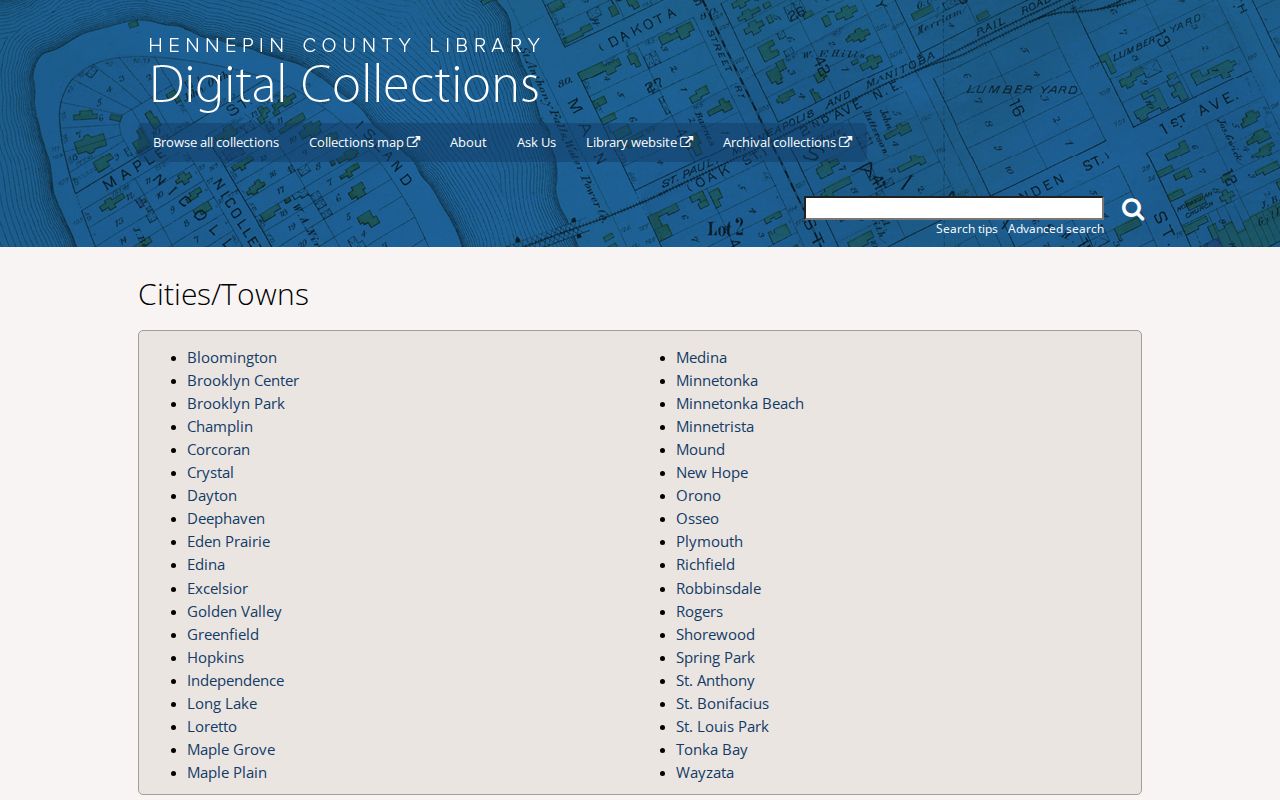
The shared collection title is not an error in an address trail. It reflects the regional publication grouping and makes the city filter one more search setting to check.
New Hope Telephone Directory Runs
Minnesota Historical Society's Hennepin telephone-directory finding aid supplies the longer New Hope city directory companion. The finding aid begins with county telephone material from 1889 and describes a large research collection. New Hope shelf groups include most years from 1960 through 1992, with print, yellow-page, and microfiche differences, followed by selective holdings into 1999–2005. A phone entry can be an address lead, but it should be compared with a dated directory, deed, or newspaper source before drawing a household conclusion.
The MNHS Hennepin telephone-directory finding aid identifies the New Hope print, yellow-page, and fiche holdings.
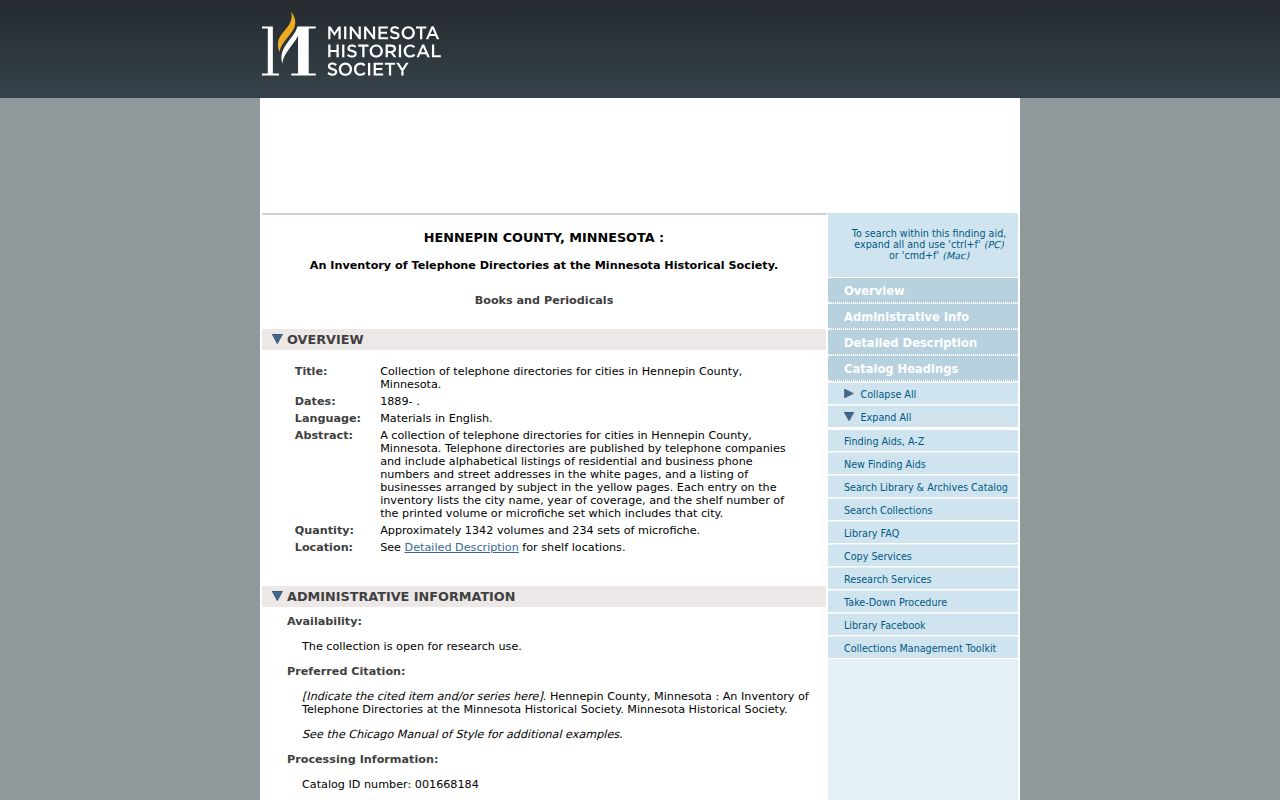
Edition type matters. A yellow-pages volume and a residential print edition do not describe the same set of entries, even when they share a publication year.
New Hope Historical Archive Routes
For a missing scan or a question that needs more than a listing, use the collection that holds the relevant medium. Hennepin County Library Special Collections covers books, photographs, yearbooks, archival material, maps, and clippings for the county. Its Minneapolis Central location has walk-in hours listed Monday through Thursday, 9:00 to 4:30, and can be reached at 612-543-8200 or specialcoll@hclib.org. Hennepin History Museum also holds directories, maps, photographs, blueprints, yearbooks, and mid-century regional material through research by appointment.
Hennepin History Museum archives describe the regional material available by appointment.
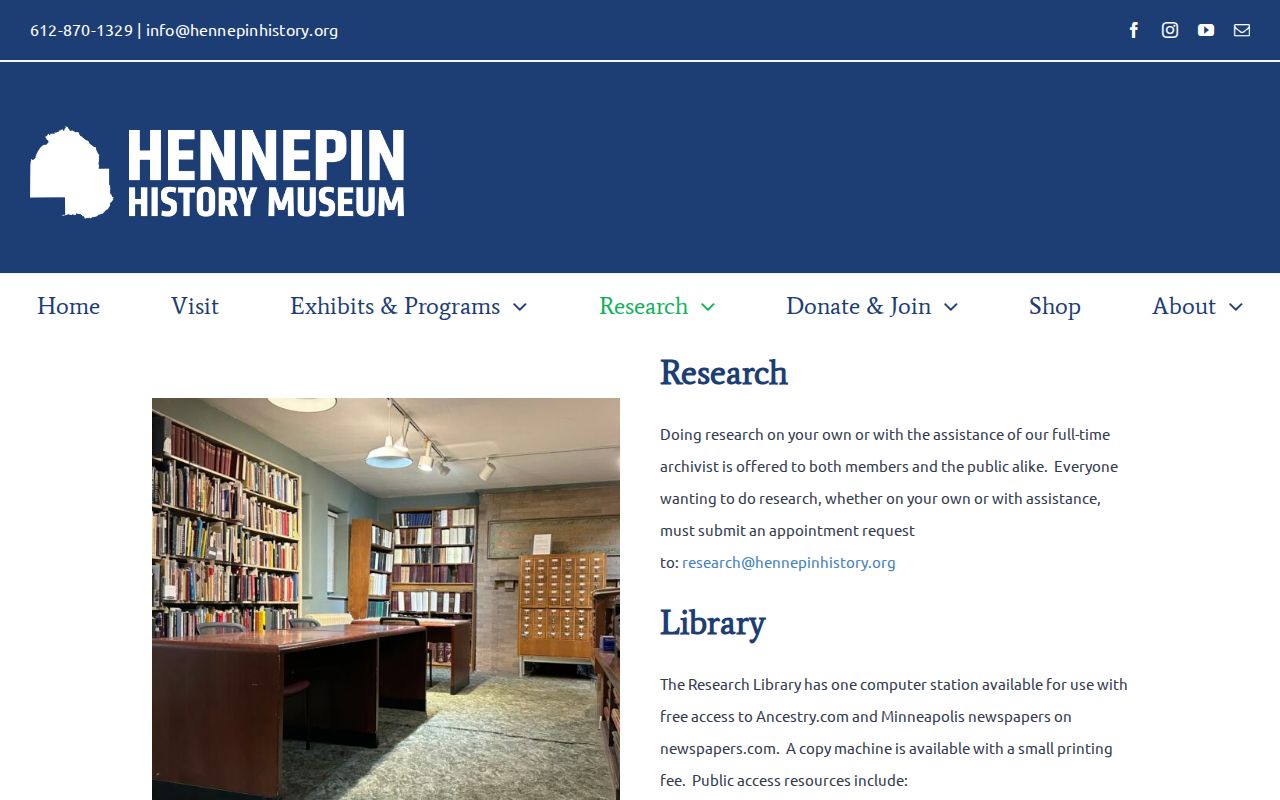
An archive appointment is a useful fallback for directory gaps because it can pair a printed listing with maps, clippings, or photographs from the same period.
Hennepin County Library Digital Collections brings telephone books, city directories, photographs, and local-history material into one searchable service.
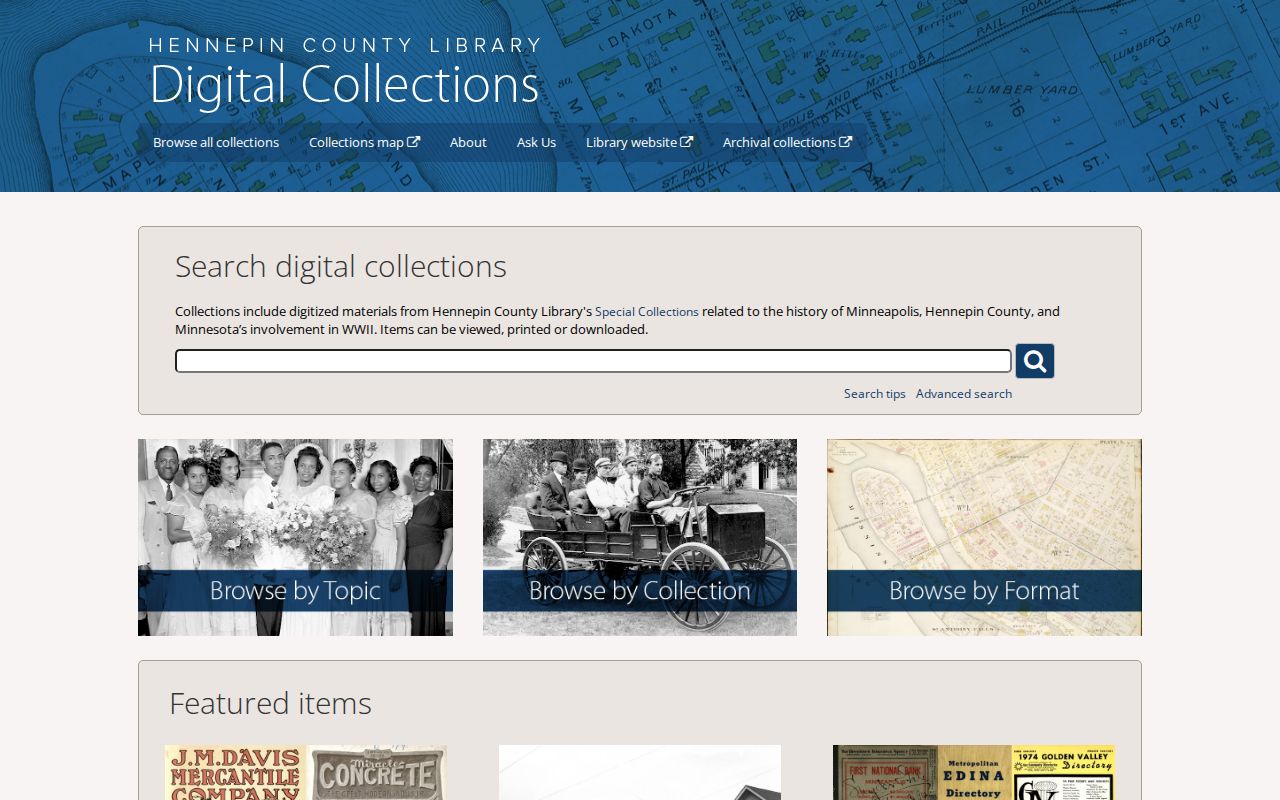
Digital search helps locate an edition quickly, while a saved page citation keeps the result usable if interface filters or scans later change.
Reading a New Hope City Directory
A city directory entry is compact and often selective. Many historical volumes favor a head of household, list women differently depending on marital or independent status, and omit minors. A residence line may place a name at an address for that edition, while an occupation line may be absent or abbreviated. Treat each field as a statement with a role and date. Do not convert an owner mark, a spouse notation, or a telephone listing into a claim that every member of a household appears in the volume.
| Name line | Usually the listed person or household head; spelling may differ across years. |
|---|---|
| Address | The residence or address wording printed in that edition, not necessarily a current postal form. |
| Spouse notation | A parenthetical spouse reference may help distinguish similar names, but conventions vary. |
| Occupation line | A period clue when supplied; absence does not mean the person lacked an occupation. |
| Owner or renter mark | Use only if the volume's abbreviation key defines it, and retain the printed symbol in notes. |
- Criss-cross directory
- An address-ordered portion of an edition, when provided, used to find listed entries by street rather than by surname.
- Householder index
- A name arrangement focused on the person treated as the household listing, not a full population roll.
- Abbreviation key
- The volume's own explanation of shortened terms and marks. Photograph or transcribe it before interpreting an entry.
The Hennepin digitized directory search is the source interface for exact name and address queries in the local collection.
A reverse-address result is still an edition-specific listing. Save its year, page, and exact address text before using it with other records.
New Hope Yearbook Trails
Cooper High School yearbooks provide a local, date-stamped community source that can help interpret a directory gap. Hennepin County Library's yearbook collection reports many digitized county yearbooks from 1890–1988. For Cooper High School at 8230 47th Avenue North, New Hope, print holdings run 1965–2006, 2008–2013, and 2016–2025, with some issues online. A yearbook can place a student or activity in a school community, but it is not residence evidence and should not replace a directory or parcel record.
New Hope's early area history also matters here. Older material may use Crystal Lake Township, Crystal, a rural route, or a later New Hope label for the same general place. New Hope incorporated in 1953 after the rural township period, so a city label should not be forced onto a source that uses an earlier jurisdiction.
Note: Keep the source's original locality label alongside the modern New Hope parcel context when comparing historical records.
New Hope City Directory Requests
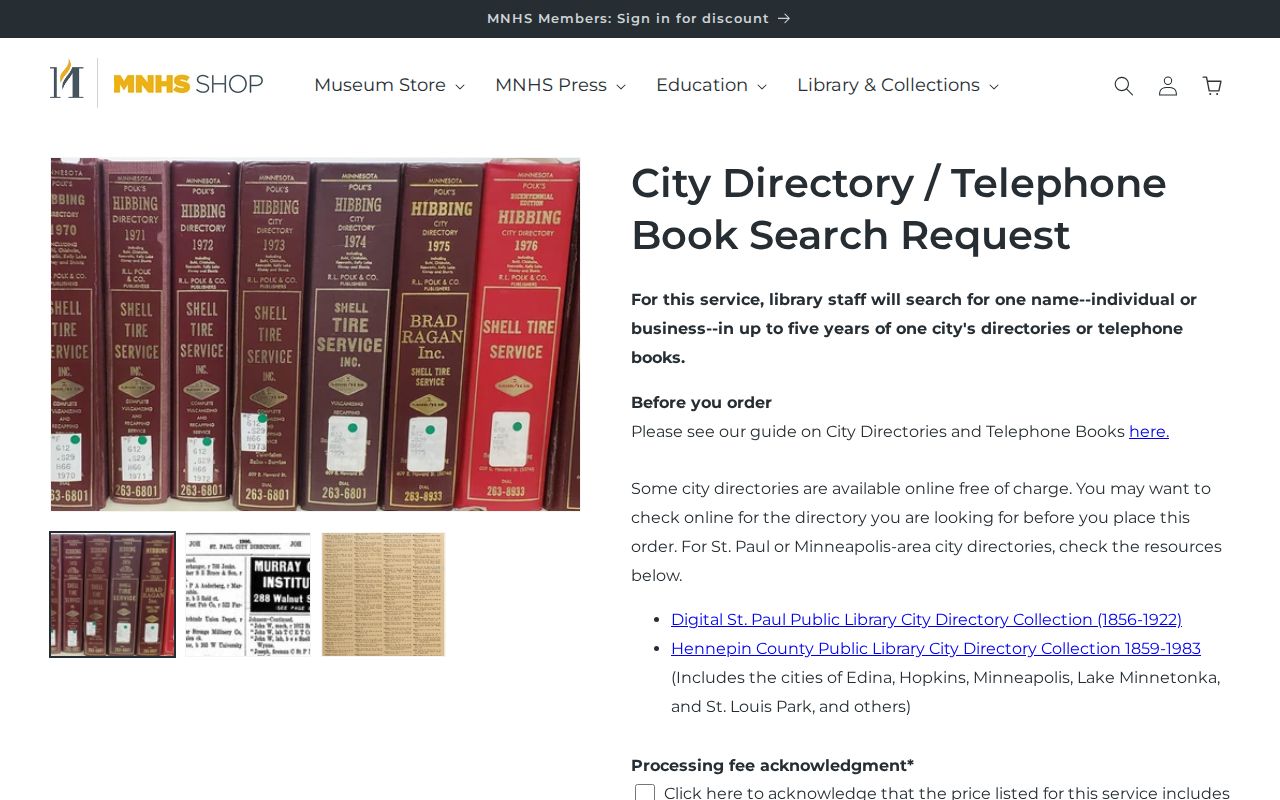
When an edition is not available through an online scan, Minnesota Historical Society offers a staff-assisted city-directory and telephone search request. Staff can search one name or business in up to five years of one city's directories or phone books. The listed cost is $20 for both directory and telephone searches, including a $5 nonrefundable processing amount, with digital delivery or scanning. The estimated return time is 3–4 weeks and can reach 12 weeks. Check the request page before ordering because pricing and timing can change.
Minnesota Historical Society's city-directory search request documents the staff-search scope, delivery, and stated processing terms.
Give the staff the exact name variants, target years, and city context. A request is more useful when it seeks a defined historical question rather than an undated name search.
New Hope City Directory Timeline
The records trail has a clear sequence, but each layer keeps a different kind of evidence. Its sequence separates a historical address lead from land and municipal files. One household search can therefore require more than one custodian.
- Before 1953: county plats, census, newspapers, and township or Crystal context may use names other than New Hope.
- 1953: New Hope incorporated as a city, creating a municipal pivot without instantly standardizing all directory and postal labels.
- 1960–1963: MNHS New Hope telephone volumes provide phone-and-address leads before the digitized directory run.
- 1964–1983: the New Hope–Plymouth–Wayzata set supplies annual city-directory snapshots.
- 1984–1992: telephone holdings, newspapers, and later municipal permit material help extend the household trail.
- 2025: Hennepin County Library highlighted the 1964–1983 group as newly available online.
A directory discovery that needs a current comparison can be checked through the New Hope resident lookup route, which uses present-day official sources rather than recreating the historical shelf.
Trace a New Hope City Directory Household
Trace a household one edition at a time. Start with a fully written address and the name spelling closest to the target year. Then preserve every finding as an address appearance, phone listing, school clue, or public notice, rather than blending sources into a single unnamed timeline. The census can provide a wider household snapshot, but federal population schedules after 1950 are not public. If a 1950 name search fails, the National Archives recommends browsing the enumeration district.
- Find the first plausible name or address appearance in a dated New Hope city directory edition and save the page.
- Search the next available editions forward and backward, testing the period's street abbreviation and nearby-city filters.
- Use a criss-cross portion, where the edition includes one, to compare the address route with the surname route.
- Pair the dated directory appearance with the nearest public census, telephone edition, newspaper notice, or yearbook clue.
- Compare a land record only for the role it actually shows, such as recorded transfer party or legal-description continuity.
- Mark a missing year as a gap until another source fills it. A disappearance can reflect a move, a changed listing convention, or an omitted entry.
Hennepin County Library's Researching Homes guidance is useful for the address side of this process because it joins city directories with newspapers, local permits, plats, and a Sanborn availability check. A New Hope-specific Sanborn sheet was not verified, so confirm coverage with the library or Minnesota Historical Society before relying on that map type.
New Hope City Directory Gaps
Absence is a finding only after the search route is documented. The digitized collection is exact-text sensitive, women and children are not represented evenly, and historical editions may use a neighboring locality or a different street form. A missing online permit before June 1988 points to a City Hall file request, not necessarily to a missing building history. A missing deed image can require the RecordEASE Pro route or the Hennepin County Government Center research kiosk. The source type determines the right fallback.
For municipal records that are not posted, New Hope directs requesters to identify an existing record and contact the City Clerk. Under the Minnesota Government Data Practices Act, a custodian need not create a new record or answer a new question. Request a dated meeting packet, resolution, license, or correspondence series instead. That keeps the request tied to a record the office can locate.
Note: A documented no-hit is more useful than a guessed household connection when collection coverage or address wording remains uncertain.