
New Hope Previous Residents by Era
Previous residents are best traced with a sequence of sources rather than one master database. Hennepin County's current parcel and Recorder systems establish the property bridge. Directories, telephone books, newspapers, yearbooks, and the federal census supply historical appearances. New Hope permit records add a dated municipal layer. The table keeps the sources in their proper time ranges and shows why a name must be labeled as an owner, transfer party, directory listing, or community clue instead of being treated as a complete household record.
| Source | Years | Where Held | What It Shows |
|---|---|---|---|
| Hennepin Property Information Search and RecordEASE | Current use; online index start date not published | Hennepin County property and Recorder systems | PID, parcel description, sales, recorded-document and party trail |
| New Hope–Plymouth–Wayzata directories | 1964–1983 | Hennepin County Library Digital Collections | Annual name-and-address appearances |
| Hennepin telephone directories | New Hope holdings mostly 1960–1992; selected later | Minnesota Historical Society | Phone and address leads by edition |
| Federal population census | 1790–1950 public | National Archives | Dated household snapshot; enumeration-district fallback |
| New Hope permit files | Online since June 1988; earlier files at City Hall | New Hope inspections records | Permit property, date, type, and status information |
| Minnesota newspapers | 1849–today | Minnesota Digital Newspaper Hub and library databases | Address notices, obituaries, legal notices, and community events |
For a recent parcel question, start with the address and 13-digit PID. For a mid-century household question, use a directory or telephone edition before moving to the deed chain. For an early address, search under Crystal Lake Township or Crystal as well as New Hope because those jurisdiction labels changed over time.
Start New Hope Previous Residents With PID
The 13-digit Hennepin PID is the durable bridge between a familiar street address and historical land records. The Hennepin County Property Information Search accepts a property address, PID, addition name, or the property interactive map. Its result can show taxes, assessment values, tax-parcel description, sales, and recently recorded-document history. The county does not advertise an owner-name search, so begin with a normalized address or use the map and legal description to recover the PID.
Save the PID, current situs address, tax-parcel description, and result date. A tax mailing address can point to an owner contact or agent rather than the parcel. Parcel divisions and combinations can also create successor PIDs, so both the older and newer numbers may be needed before an address history is assigned.
Hennepin County's Recorder research page describes Property Watch, the address-or-PID alert service for future recorded documents.
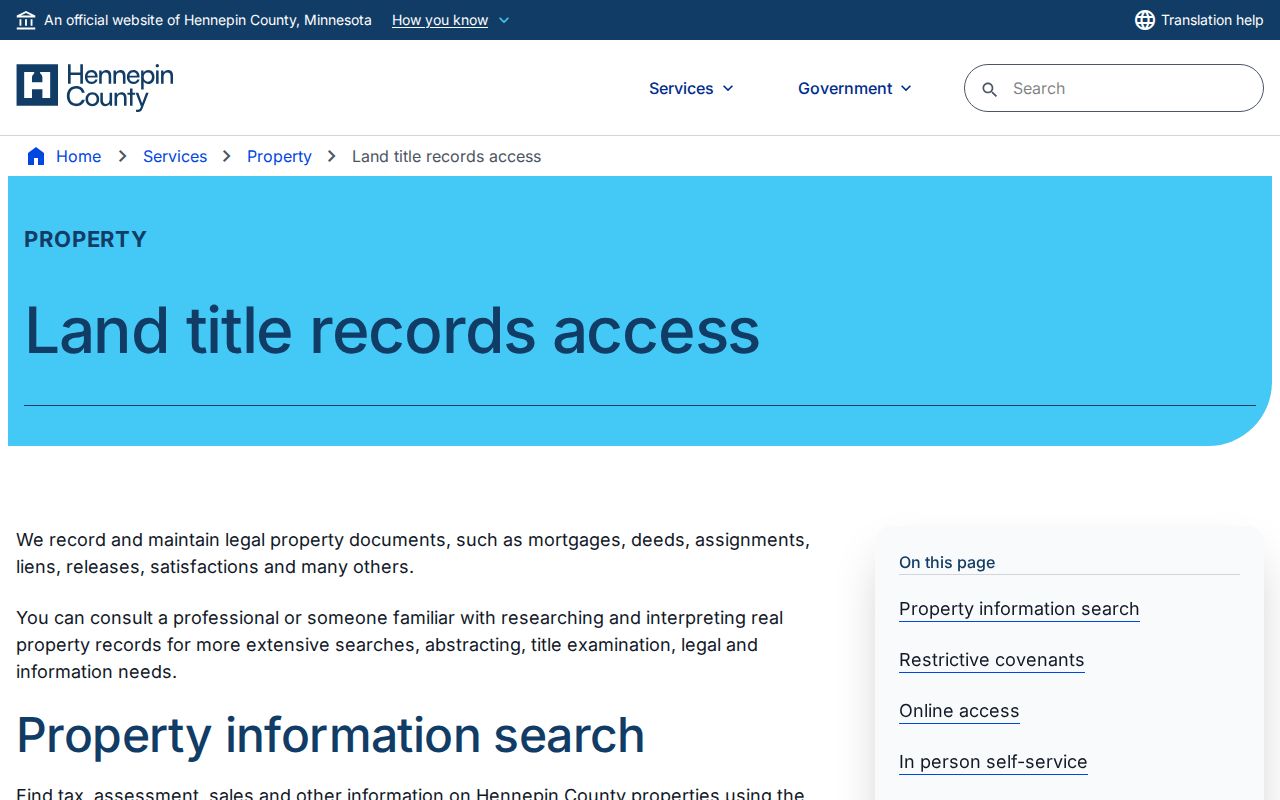
Property Watch looks forward only. It can notify a user of a later recording, but it cannot supply names from an earlier household timeline.
Note: Keep parcel location, tax mailing address, and legal description in separate fields when preserving a New Hope address trail.
New Hope Previous Residents and Deed Chains
A deed trail identifies recorded land parties, not everyone who lived at a house. Start from the current parcel record, then use the PID or legal description in Hennepin County Property and Land Records / RecordEASE Public Search to locate an instrument. Request the required public-search user ID and password through ts.recordease.support@hennepin.us. Record the document number, recorded date and time, document name, grantor, grantee, legal description, related document references, and image indicator. The county's free online index is limited and its earliest online coverage date was not published in the official sources reviewed.
- Find the current parcel through the Hennepin property search or map, and save the 13-digit PID and tax-parcel description.
- Search RecordEASE by PID, legal description, and a date range, then identify the most recent recorded transfer or certificate event.
- Read the document name and legal description before describing the parties. A mortgage, release, or assignment is not the same as a transfer.
- Use the seller or earlier grantee, reference document number, and legal description to locate the prior chain link.
- Repeat one recorded instrument at a time, keeping a role column for grantor, grantee, trustee, mortgagee, or legal representative.
- When an online image or older result is unavailable, use RecordEASE Pro, request basic help by email, or visit the county's self-service kiosk in room SK-0353 at the Government Center.
- Grantor
- The party who conveys or releases an interest named by the instrument. The document type determines what that role means.
- Grantee
- The receiving party named in an instrument, who may be a buyer, trustee, organization, or another entity.
- Chain of title
- A documented sequence of land-interest records connected by legal description, not an automatic list of occupants.
- Legal description
- The parcel's formal land description. It is the tie-breaker when street labels or PIDs change.
Hennepin County lists self-service research kiosks at the Skyway level of the Government Center, 300 South Sixth Street, room SK-0353, generally Monday through Friday, 8:00 to 4:30 except holidays. RecordEASE Pro is listed at $2.50 per document, certificate, or plat, with no monthly or search fee. Verify current terms before placing an order.
New Hope Previous Residents on Torrens Parcels
About 45% of Hennepin County property is Torrens, according to the county. That matters because an abstract parcel is usually followed through a document chain, while a Torrens parcel uses a certificate system. A familiar deed-like link may therefore be absent for reasons that have nothing to do with an incomplete search. Ask the Recorder which certificate or document series applies before treating a gap as proof that the parcel changed hands without a record.
Do not rely on map appearance alone. Hennepin GIS is useful for orientation, parcel shape, and comparing neighboring PIDs, but the county warns that its maps do not depict legal boundaries and only a qualified surveyor can determine one. When a parcel was split or combined, search both the old and successor PIDs, the legal description, subdivision name, and section information before joining earlier names to the present address.
New Hope Previous Residents in Directory Years
Once the land trail identifies the right parcel, use annual directories for the household layer. The Hennepin County Library New Hope–Plymouth–Wayzata run covers 1964–1983 and is exact-text sensitive. Search the address with the period's abbreviations, then search the surname on its own. Deselect nearby cities when the interface permits. A listing can show that a person appeared at an address in that edition, but head-of-household practices, spouse parentheses, independent or widowed entries, and omitted minors limit what it can establish.
Hennepin County Library's Researching Homes guide links city directories with permits, newspaper clippings, plats, and an availability check for Sanborn maps.
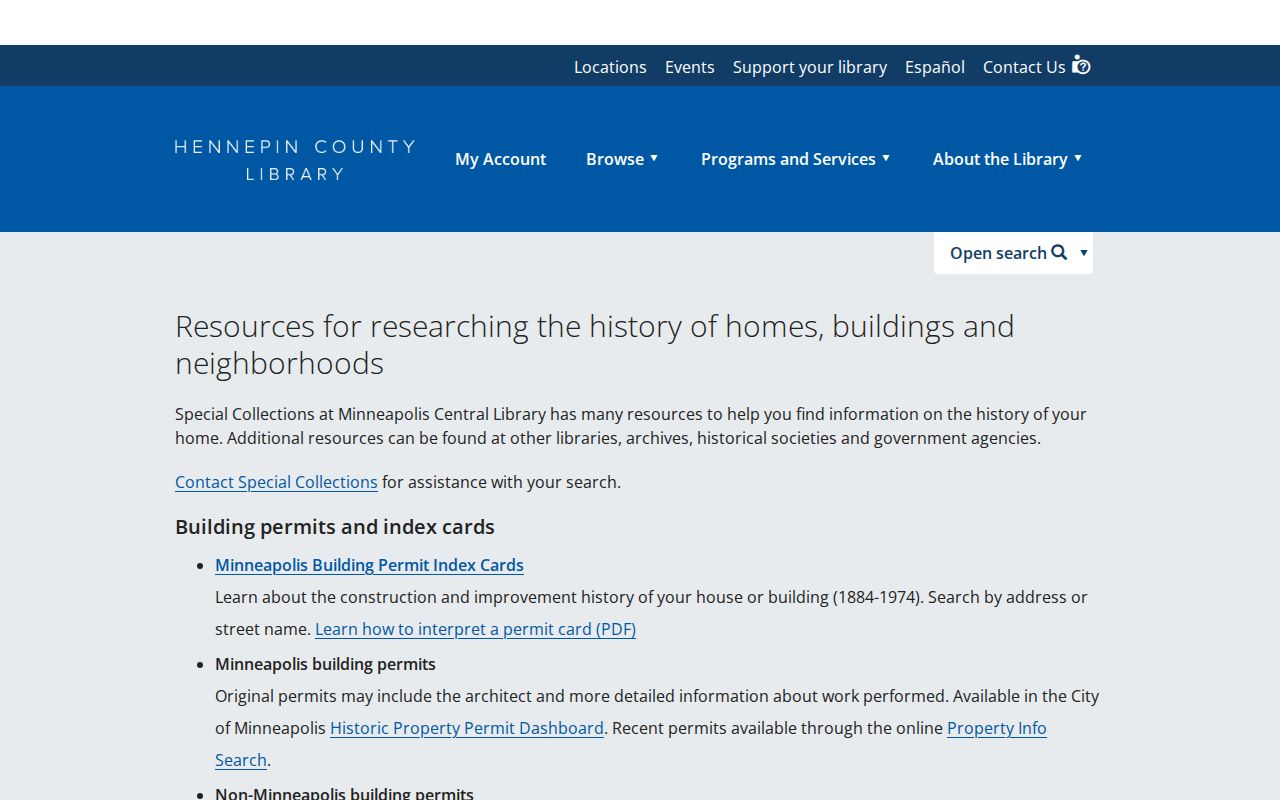
The home-history route makes the directory a dated household clue rather than a substitute for a parcel record or legal-description search.
The historical collection itself is covered on the New Hope city directory page. Use that shelf for scan and edition details, then return to the address trail with the year and page preserved.
New Hope Telephone and Yearbook Leads
Telephone books help bridge the years around the digitized directory set. The Minnesota Historical Society finding aid shows New Hope print, yellow-page, and fiche holdings through most of 1960–1992, with selected later holdings. Compare edition types because a yellow-pages volume does not represent the same entries as a residential print directory. A telephone result is an address or phone lead, not a complete household roster.
Cooper High School yearbooks offer another local, dated community source. Hennepin County Library has digitized many county yearbooks from 1890–1988, while Cooper High School in New Hope has print holdings for 1965–2006, 2008–2013, and 2016–2025, with some online issues. Yearbooks can corroborate a school or community connection, but do not establish that someone lived at a particular address.
Hennepin County Library's yearbook collection documents the Cooper holdings and broader county digitization.
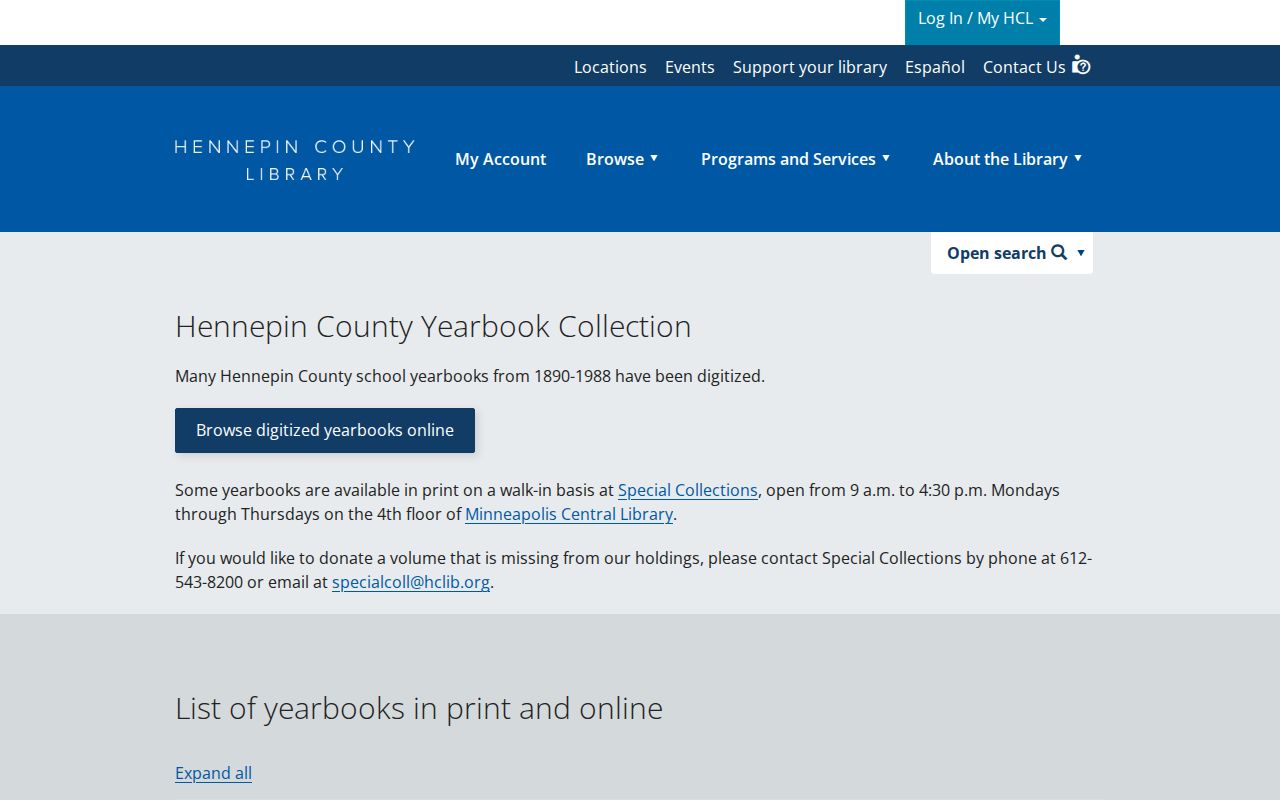
Use the school year and the publication page as the citation, then seek a second, address-based source before labeling anyone as a past New Hope household member.
New Hope Previous Residents in Census Sources
Pair directory editions with census years and newspapers to fill the intervals between annual address clues. The Minnesota Digital Newspaper Hub covers 1849 to the present, although most post-1977 content is available through Gale Family Library rather than the open web. Search exact address variants, street abbreviations, obituaries, meeting notices, and property notices. A notice that mentions an address should be described as a notice, not automatically as proof of residence.
Minnesota Digital Newspaper Hub provides the historical newspaper search route for New Hope address and community clues.
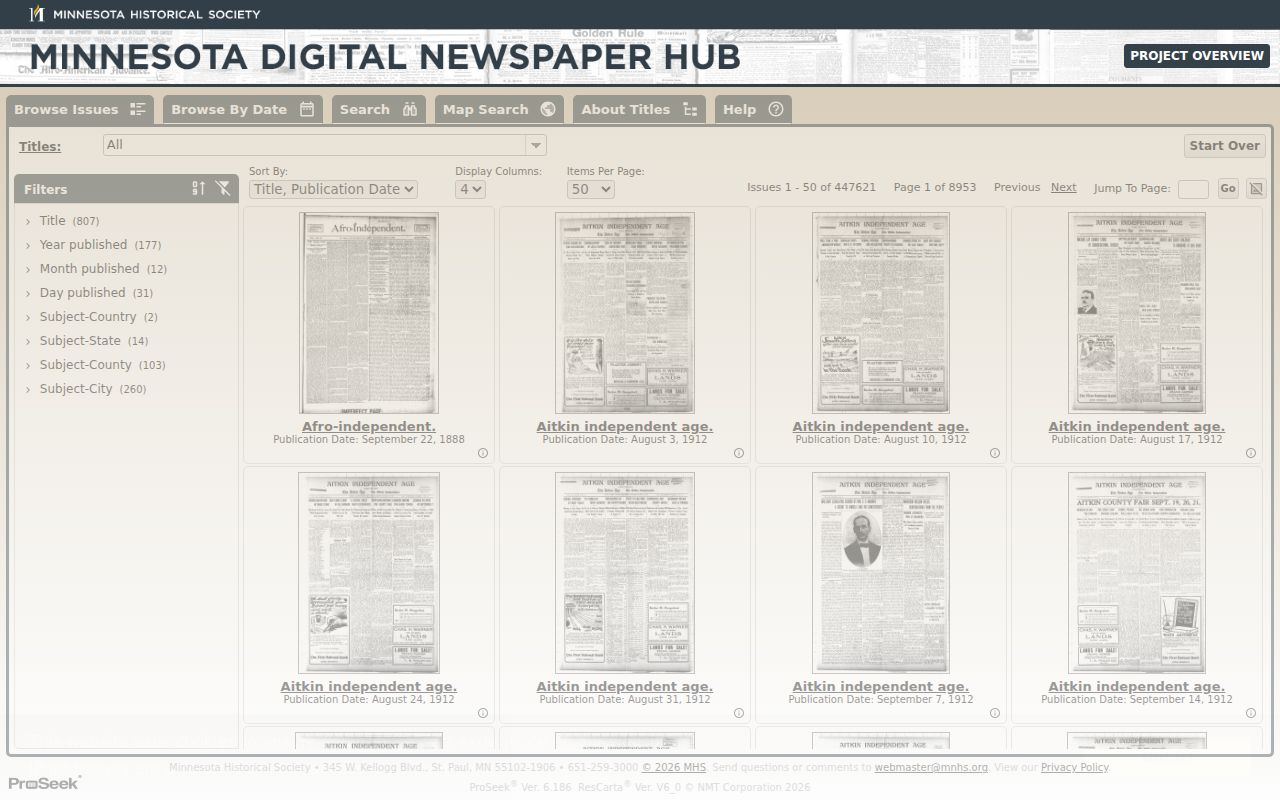
Newspaper results work best as corroboration when the article date, address wording, page, and purpose of the notice are kept together.
National Archives census research explains the public federal population schedules and access routes.
Federal population censuses through 1950 are public under the 72-year rule. Later census schedules are not public, so there is no later federal household list to fill every address gap.
The National Archives 1950 Census resource documents the name-search and enumeration-district routes.
When the 1950 OCR or name index misses a household, browse the enumeration district instead of assuming that the household is absent.
Address process: New Hope address and PID → RecordEASE legal description → dated directory or telephone edition → census or newspaper corroboration → source-year-page record.
New Hope Previous Residents Before 1988
New Hope permits add an administrative timeline, but they have a firm access boundary. The city's permit search accepts property number and street name for permits issued since June 1988. A result without a Final Date is identified by the city as still open, which is a permit-status clue and not evidence of occupancy. Building, mechanical, plumbing, fire-protection, sign, and other permit types all attach different roles to a property.
For earlier files, contact the City Hall inspections division at 763-531-5127. New Hope City Hall is at 4401 Xylon Avenue North, New Hope, MN 55428. The city identifies normal City Hall hours as Monday through Friday, 8:00 a.m. to 4:30 p.m. Request the existing property file by address and period rather than asking the city to create a house history. That approach follows the Minnesota Government Data Practices Act request path.
Historical labels can be just as important as permits. The early area was associated with Crystal Lake Township and later Crystal before New Hope incorporated in 1953. Keep the original locality label in every citation and use the PID or legal description as the continuity test when a modern New Hope street name is not returned.
New Hope Previous Residents Evidence Limits
A careful New Hope past-household conclusion needs at least two independent clues, such as a directory address plus a recorded transfer party, or a newspaper notice plus a telephone listing. Record the exact source, edition or recording year, page or document number, printed address, role, and corroborating clue. The right conclusion may be “appears in this address record” rather than “lived here,” especially when a source shows a tax mailing address, a permit applicant, a trustee, or a deed party.
New Hope's City Clerk records route includes the Laserfiche repository and Clerk requests. The Recorder, by contrast, is the custodian for real-estate instruments. Send a municipal request to the Clerk and a deed or certificate question to Hennepin County Property and Land Records, because each office holds a different kind of record.
Lawful personal use. Use New Hope previous-resident research for house history, family history, estate questions, or personal curiosity. Do not use public records to harass, track, or harm any living person, and honor protected-address programs such as Minnesota Safe at Home.
Note: A source conflict should remain visible in the research log until an independent dated record resolves it.